
You Know Better. You’re Still Struggling. Both Can Be True.
I turned forty-five last month.
And this summer has knocked me sideways.
My body temperature is all over the place. My appetite is off, which means my energy is off, which means my patience is off.
I feel out of sorts in a way I cannot quite argue my way out of.
Which is its own kind of frustrating … because I know better. I have the clinical background. I have the training. I write about this. I preach this.
And I am still sitting here, out of sorts, in July.
So let me say the thing I wish more people in this space would say out loud.
It is okay to struggle sometimes. Knowing better does not make you immune. It just makes you a person who knows exactly what is happening while it happens to you anyway.
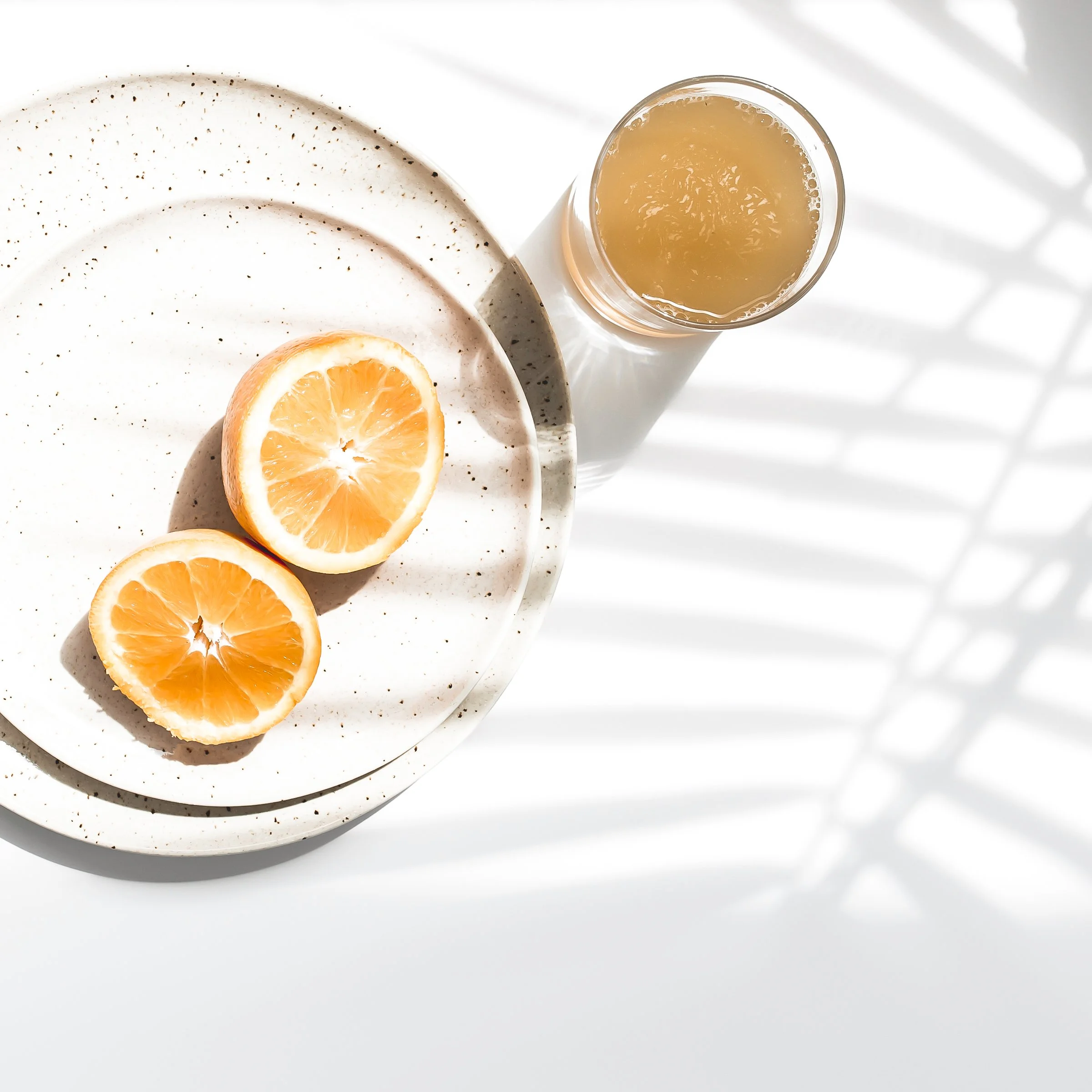
Small, ordinary things. Water, real food, and a little grace.
When the Routine Goes, Everything Feels Heavy
Here is what most of this summer has looked like.
One thing after another. Illness moving through the house, then moving through it again. An injury. Travel with recovery on both ends of it. A stretch where every time I thought we were finding the rhythm, something else came through the door.
I won’t detail all of it, because it is family business and it is ours. But I will tell you the shape of it, because I think the shape is what you will recognize.
I am a planner. I am a structured person. I like a routine and I build good ones.
And none of that mattered, because the things that came for my routine this summer were not things I could have disciplined my way out of.
That is the part I want to name carefully.
When you run on structure, the absence of structure does not just feel inconvenient. It feels heavy. And there is a particular kind of low-grade panic that sets in when you had the best intentions, you had the plan written down, and life simply did not cooperate.
I use the phrase “falling apart” loosely here. Life did not become that complicated. It just stopped being predictable.
And for some of us, that is enough.
Meanwhile, Your Body Is Working Harder Than You Think
Here is the part I actually do know something about … and the part that changed how I have been treating myself these last few weeks.
Heat is a physiological stressor. That is not a dramatic statement, it is just true. Your body is doing significantly more work in July than it was in February, and you cannot see a single bit of it happening.
You only feel the output.
And if you are somewhere in perimenopause, that work is landing on a system already managing a moving target.
Your Internal Thermostat Has a Narrower Window Right Now
You know the flush. The one that arrives out of nowhere in a room nobody else finds warm, while you are quietly peeling off a layer and hoping it is not obvious.
Your body works hard to hold your core temperature inside a fairly tight range. There is a comfortable zone in the middle where you are neither sweating nor shivering.
During perimenopause, fluctuating and declining estrogen appears to narrow that zone. A smaller rise in core temperature is now enough to trigger a response. Your thermostat is not broken. It simply got more sensitive.
Now put a summer on top of it. You are starting from a warmer baseline every hour of the day, which means you are living much closer to that trigger point than you were in March.
Same body. Same symptoms. Much louder circumstances.
Sleep Goes First, and It Takes the Next Day With It
To fall asleep and stay asleep, your core body temperature has to drop. That drop is one of the signals that starts sleep. It is not a preference, it is mechanics.
A warm bedroom makes that drop harder. Night sweats interrupt it. And once sleep gets choppy, the next day is already compromised before you open your eyes … cortisol runs higher, blood sugar is harder to steady, hunger cues get loud and unreliable, and by evening you want everything in the pantry.
What actually helps:
• Get the bedroom genuinely cool. Around 65 to 68 degrees is where most sleep research lands. Be stubborn about this one.
• Breathable bedding, breathable layers. Nothing that traps heat against you.
• A cool shower before bed. Your body sheds heat afterward as it settles back to baseline.
• Look honestly at alcohol. It is one of the most reliable triggers for night sweats in perimenopause, and summer is exactly when it quietly creeps up. I am not telling you to quit. I am telling you to notice.
The Appetite Thing Is a Trap
The heat takes your appetite. You skip breakfast because nothing sounds good. Lunch is light, almost accidental. You move through the day feeling perfectly fine … maybe even a little pleased with yourself.
And then somewhere around eight in the evening, the wheels come off, and you are eating things you did not plan to eat and do not particularly enjoy.
That is not weak willpower. That is your body collecting on a debt.
Appetite suppression in heat is real and completely normal. But if you let it run the whole day, what you end up short on is protein … the one nutrient that matters most right now for muscle, for bone, for staying full, and for keeping blood sugar steady at dinnertime.
What actually helps:
• Front-load your protein. Eat earlier, when your appetite is naturally strongest.
• Go cold. Greek yogurt, hard-boiled eggs, chilled salmon, shrimp, cottage cheese, a good bean salad. Nothing says protein has to be warm.
• Eat your water. Cucumber, melon, tomatoes, citrus, berries.
• If evening is when your hunger finally arrives, stop fighting it. Let dinner be the bigger meal. Just make sure the protein is there.
Water Alone Is Not Hydration
When you sweat, you are not only losing fluid. You are losing sodium, and to a lesser degree potassium and magnesium.
Replace all of that with plain water and you can end up drinking constantly and still feel foggy, headachy, crampy, and strangely flat … and then wonder why, because you did the thing everyone told you to do.
Water is not the problem. Water alone is an incomplete answer when you are sweating through your shirt most days.
Now, I do think the wellness industry has taken something simple and turned it into a thirty-five dollar problem with a proprietary blend and eleven exclamation points on the label. Most days, for most people, food handles this.
But let me be clear about where I land, because it is the same place I land on protein powder.
An electrolyte packet is a tool, not a staple.
I keep them in my bag when I travel, because I am not always going to have access to good salt and a lemon at thirty-five thousand feet. Same way I will take a protein shake on a long travel day rather than eat whatever the airline is calling dinner. That is a tool doing its job.
What I do not do is build my daily baseline on either one. The default is food. The packet is for the days when food is not on offer.
What actually helps:
• Salt your food. If you are sweating daily and eating mostly whole foods, you are likely getting less sodium than you assume.
• A pinch of mineral salt and a squeeze of citrus in your water on heavy sweat days. This is the everyday version, and it costs almost nothing.
• Magnesium-rich foods … leafy greens, pumpkin seeds, beans, dark chocolate. That last one is not a loophole. It is just true.
• Keep a clean electrolyte packet or two for travel, heavy sweat days, or illness. Read the label. Meaningful sodium, minimal sugar, nothing selling you a transformation.
Move Your Movement
If your workouts feel disproportionately hard right now, that is because they are.
Training in heat raises your perceived effort, raises your core temperature faster, and raises cortisol more than the same session done cool. You have not lost fitness. The conditions changed underneath you.
So change with them. Train indoors, or train early. Walk the dog at seven in the morning instead of noon. Keep the strength work, because muscle and bone are not negotiable in this decade. Let the outdoor cardio be shorter and gentler than it was in March.
Adjusting the plan for the season is not quitting. Adjusting the plan for the season is the entire point.
The To-Do List
A few days ago I sat down to write out everything I needed to accomplish in order to feel like I was back on track.
About six items in, I noticed I was yawning. I was rubbing my eyes.
I was exhausted … writing a list of tasks designed to fix my exhaustion.
So I stopped and asked myself a question I want to hand to you as well.
Is this do or die?
It was not. None of it was. Not one item on that list was going to matter in a week, and every single one of them would still be there tomorrow.
What I actually needed was a day. A real one. To rest my body, quiet my mind, and stop performing recovery long enough to actually recover.
So I took it. And it was the best thing I could have done for myself.
The hardest part was not the resting. The hardest part was not feeling guilty about the resting. That took real effort, and I want to be honest about that, because a lot of us have gotten very good at treating rest as something we have to earn with a completed checklist.
You do not.
The Math Nobody Does
Here is what I keep coming back to.
Two weeks off routine does not undo the consistent work you have put in the other eighty percent of the time.
It just does not. That is not how bodies work. That is not how habits work. The panic says you have lost everything, and the panic is simply bad at math.
Something I have learned at forty-five, and as a mother, is that the skill is not never getting knocked off course.
The skill is the pivot.
And the pivot is not a one-time correction. It is the job.
I am pivoting now, because it is July and my body is asking for something different. Before I know it the kids will be back in school and the temperature will start to drop, and I will pivot again. At some point after that my body will change in some way I have not anticipated, and I will pivot again.
Nothing here is set in stone. Not the routine, not the structure, not the plan I was so pleased with in April.
Which is why the most valuable thing you can build is not a perfect routine. It is a working knowledge of your own baseline. What normal feels like for you. What actually helps, and what only sounds like it helps.
Because once you know that, you can feel the pivot coming before it becomes a crisis.
You may not do it on time. You may not do it gracefully. But you will get it done, and that is enough.
What This Was Never About
It has never been about looking a particular way. That is genuinely at the bottom of my list.
It is about feeling good in my body, and being a good example for my family … for my kids especially, who are watching how I talk to myself when things go sideways far more closely than they are watching anything else I do.
So yes. Balance. Consistency. Discipline.
And also grace. Patience. Flexibility.
Those are not opposites. They are the same practice, and you need all six of them to make anything last.
Where to Start
Cooler bedroom. Protein earlier. Minerals with your water. Movement before the heat arrives.
Four things. That is the whole list.
And they work because they are honest about the season you are actually in … rather than the season a wellness account on the internet thinks you should be performing.
If the temperature swings and the broken sleep and the energy dips are showing up well outside of summer, and you want to understand what is happening underneath all of it, my free hormone mini guide walks you through three of the hormones quietly running your energy, sleep, and cravings. No cost, no catch.
You are not behind. It is hot, your routine fell apart, and you are a human being. All three can be true at once.